
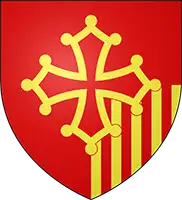
Occitanie is the large region of southern France, a vast area stretching from the Pyrenees to the Cévennes, and from the Atlantic to the Mediterranean, bringing together two historically distinct cultures: Languedoc and Gascony. It is the region of the Occitan language, the troubadours and Catharism, of Toulouse, the Pink City, and Carcassonne, the Citadel, of the scrubland and vineyards of Languedoc and the snow-capped peaks of the Pyrenees.
The history of Catharism and the Albigensian Crusade (1209–1229) has left a deep mark on the region’s landscape of fortified castles: the Cathar fortresses—Montségur, Quéribus, Peyrepertuse, Puylaurens, Termes, Aguilar — perched on their rocky outcrops amidst wild scrubland, bear witness to the desperate resistance of an Occitan civilisation against the conquest by the armies of the North. The crusade enabled the French crown to incorporate these southern territories, but at the cost of a trauma whose memory remains vivid.
Carcassonne, one of Europe’s largest fortified medieval cities with its double walls and towers restored by Viollet-le-Duc, is the region’s iconic monument. But Occitanie holds many other treasures: the Aveyron and its limestone plateaus, the Gers and its Gascon bastides, the Pyrenees and their border fortresses, and the Hérault and its hilltop villages form a heritage mosaic of infinite richness.