
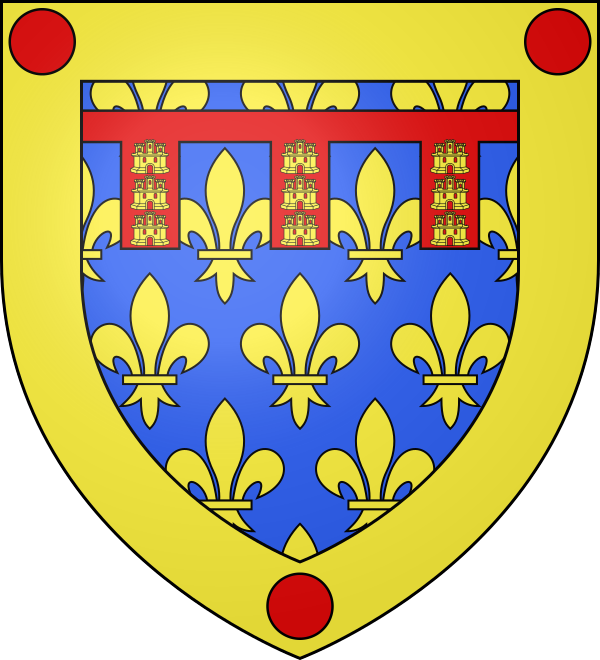
Pas-de-Calais is the department of the Strait and the beaches, a coastal and agricultural region facing England from the white cliffs of Cap Blanc-Nez and Cap Gris-Nez, just 34 kilometres from the British coast. This proximity has shaped the entire history of the department, from the Saxon invasions to the Hundred Years’ War, from Napoleon’s camp at Boulogne to the Allied landings of 1944.
Arras, its capital, boasts the largest Baroque Grand-Place in France, lined with Flemish houses featuring gabled façades that bear witness to the Pas-de-Calais’s affiliation with the Spanish Netherlands until the 17th century. Boulogne-sur-Mer, whose medieval upper town within the city walls is still surrounded by medieval ramparts and whose 13th-century castle houses a maritime museum, and Calais, home to the Channel Tunnel and Rodin’s ‘Bourgeois’ sculptures, complete the picture of a maritime and historic department.
The castles of Ecquevilly and Beaurainville, the ruins of Hesdin and the memory of the Great War battlefields at Vimy, Souchez and Notre-Dame-de-Lorette make up a diverse heritage in a department too often reduced to its role as a gateway to England.