
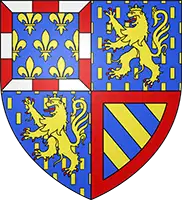
Burgundy-Franche-Comté is a region of fine wines and forests, a territory that brings together two historically distinct entities: Ducal Burgundy, which the Valois dukes turned into one of the most powerful and refined principalities in Europe during the 15th century, and Franche-Comté, which was under Spanish rule for a long time before being annexed to France in 1678 by the Treaty of Nijmegen.
Burgundy’s Côte d’Or, with its wine-growing ‘climats’ listed as UNESCO World Heritage Sites, its villages with legendary names — Gevrey-Chambertin, Vosne-Romanée, Aloxe-Corton, Meursault, Puligny-Montrachet — and its châteaux at Vougeot, Pommard and Santenay, is one of the world’s most famous wine routes. Dijon, the capital of Burgundy, is home to the Palace of the Dukes of Burgundy and its Gothic and Renaissance mansions, which bear witness to the splendour of the Valois dukes.
Franche-Comté offers a completely different landscape: the karst plateaus of the Jura, pine forests and waterfalls, cheese dairies where wheels of Comté mature, and Vauban’s citadels — Besançon, Belfort, Salins-les-Bains — listed as UNESCO World Heritage Sites. Besançon, the birthplace of Victor Hugo and the Lumière brothers, and the Château de Joux, where Toussaint Louverture was imprisoned, complete this portrait of a discreet yet rich region.