
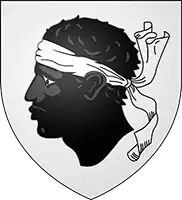
Corsica is the ‘Isle of Beauty’, an overseas department and collectivity in the Mediterranean whose mountain landscapes plunging into the sea, Laricio pine forests, fragrant maquis and turquoise waters make up one of the best-preserved natural environments in the Mediterranean. Napoleon Bonaparte, born in Ajaccio in 1769, the very year the island was annexed to France following its cession by the Republic of Genoa, is the island’s most illustrious son, whose rugged character mirrors that of its inhabitants.
Corsica’s fortified heritage is dominated by Genoese towers — around 85 remain — which dot the island’s coastline at regular intervals. These 16th-century watchtowers, built by the Republic of Genoa to protect the coasts from Saracen and Barbary raids, constitute one of France’s most distinctive architectural heritages. The citadel of Bonifacio, a town perched on white limestone cliffs 70 metres above the sea, is one of the most spectacular sites in the Mediterranean. Bastia, Ajaccio, Calvi and Porto-Vecchio each have their own citadel or Genoese fort, bearing witness to this centuries-old occupation.
The island’s interior, with its granite villages clinging to the mountainsides — Corte, Sartène, Piana, Saint-Florent —, the Restonica and Tavignano gorges, and its regional nature park covering more than a third of the island, is an invitation to hike and discover a natural environment and culture that have managed to resist the homogenisation of tourism.