
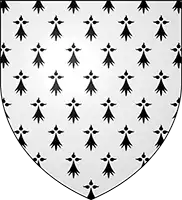
Brittany is a region of sea and granite, a peninsula battered by the winds of the Atlantic and the English Channel, whose Celtic culture, the Breton language and festive traditions make it one of the most distinctive regions in France. Long an independent duchy before its annexation to the French crown in 1532, Brittany has preserved a strong identity expressed in its dances, costumes, music and the thousands of megalithic alignments at Carnac, which bear witness to human occupation dating back to the Neolithic period.
Brittany’s castle heritage reflects this history of independence and resistance: from the medieval fortresses that guarded the borders of Brittany against French and English incursions — Fougères, Vitré, Dinan — to the stately mansions of the Breton aristocracy, fiercely attached to their privileges right up until the Revolution. The Château de l’Hermine in Vannes, the Château des Ducs de Bretagne in Nantes, Josselin, Suscinio, Kerjean, Fort-la-Latte perched on its pink granite cliff overlooking the sea… The castles of Brittany impose their imposing presence upon landscapes of wild beauty.
The Breton coast, from the Pointe du Raz to the Sept-Îles, from the Gulf of Morbihan to the headlands of the Crozon Peninsula, is one of the most spectacular in Europe: its granite cliffs, white sandy beaches, inhabited islands and legendary lighthouses combine to form a seascape that has inspired generations of painters, writers and sailors.